Social Media Monitoring Policies: What Employers Need to Know
 By Nadine Deeb, Esq. · Published · Updated August 7, 2026 · Last legally reviewed August 5, 2026 · 7 min read
Legal update note: This article is current as of July 2026 and is for employers. Social media monitoring, employee privacy, protected concerted activity, AI monitoring, and data-collection laws can change quickly. Employers should have counsel review monitoring policies, investigations, privacy notices, and discipline decisions before acting.
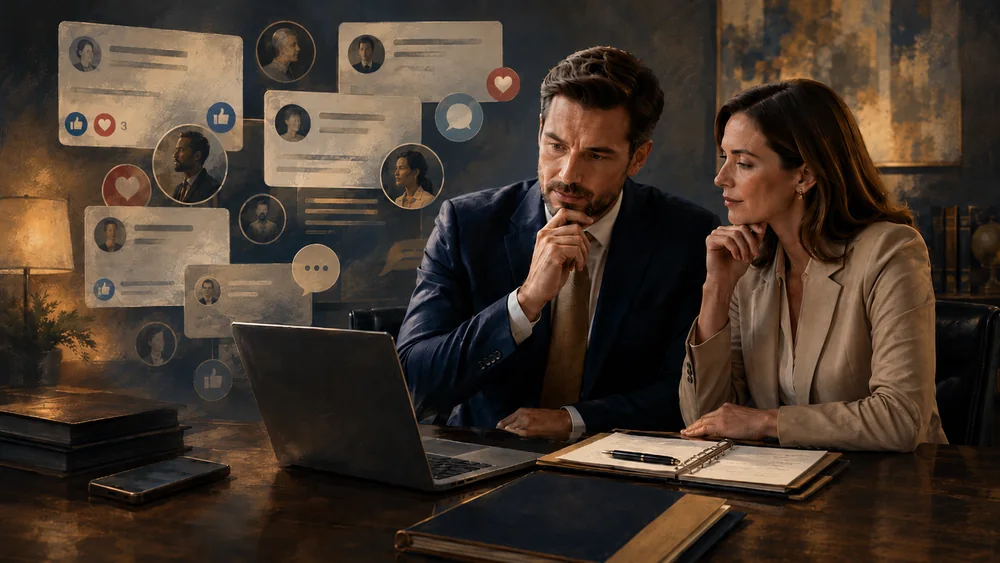
Employers often find the post before they find the policy. A manager sees a screenshot. A customer forwards a comment. A coworker complains about a private account. Suddenly HR is asking whether the company can look, save, investigate, or discipline.
Why Social Media Monitoring Is Riskier Than It Looks
That is where social media monitoring gets risky. The issue is not just what the employee posted. It is how the employer found it, whether the account was private, whether the policy chills protected activity, and whether the company collected employee data lawfully. Employers can monitor some workplace systems and public-facing activity, but they should not treat employee social media as open season.
This post is about what employers can lawfully watch, access, investigate, preserve, or use. If your question is instead whether you can act on a post — discipline or terminate over it — see our companion article on firing an employee over social media.
Public Posts vs. Private Accounts
Public posts are different from private accounts. If an employee posts publicly, the privacy expectation is generally lower. But employers should still be careful about how the information is collected, preserved, shared, and used.
Private accounts, direct messages, closed groups, and password-protected content are different. Employers should not pressure employees for passwords, ask them to open personal accounts in front of a manager, or use another employee as a backdoor into private content without legal review.
California’s Social Media Password Rule
California Labor Code § 980 restricts employers from requesting or requiring employees or applicants to disclose personal social media usernames or passwords, access personal social media in the employer’s presence, or divulge personal social media. The statute includes limited exceptions, including for certain investigations and employer-issued devices.
The practical rule for California employers is simple: do not ask for the password, do not ask the employee to log in for you, and do not retaliate if the employee refuses an improper request.
Federal Stored Communications Act Risk
Federal law also matters. The Stored Communications Act creates risk when someone intentionally accesses a facility through which an electronic communication service is provided — without authorization, or by exceeding an authorization — and thereby obtains, alters, or prevents authorized access to a communication held in electronic storage.
Employers are usually in a better position when they monitor company-owned systems with clear notice and authorization. Risk increases when the employer tries to reach into personal accounts, stored messages, or password-protected communications.
Reviewing an employee’s social media post or private account? How you collect the information can matter as much as what the post says.
Book a Monitoring-Policy Review →NLRA: Do Not Monitor or Write Policies That Chill Protected Activity
Social media policies should not read like a gag order. Employees often have the right to discuss wages, hours, benefits, scheduling, safety, management, and working conditions, including online and in nonunion workplaces.
A policy that bans “negative comments,” “disparaging statements,” or discussion of company issues may be overbroad if employees could reasonably read it to prohibit protected concerted activity.
New laws, before they catch you off guard.
Monthly. New Arizona, California, and Texas business-law changes, the deadlines attached to them, and what they mean in practice. No spam — unsubscribe anytime.
By subscribing you agree to receive emails from Accord & Shield Legal. This is general information, not legal advice.
California Privacy and Employee Data Notices
Monitoring can also become a data-privacy issue. If a covered California business collects employee or applicant personal information through screenshots, monitoring tools, device logs, social media handles, or investigation files, it should review its CCPA/CPRA notices, privacy policy, retention practices, and vendor contracts. For the broader state-by-state picture, see our guide to California privacy policy requirements.
AI, Automated Monitoring, and Screening Tools
AI and automated monitoring tools can make the risk harder to see. A tool that scores employees, flags behavior, tracks productivity, screens posts, or identifies “risk” can raise discrimination, disability, privacy, and data-security questions.
Employers should know what the tool collects, how it scores employees, whether it creates disparate impact, whether accommodations are needed, and whether employees received required notices. AI-based monitoring is not just an IT issue.
California vs. Arizona vs. Texas
California has the clearest state-specific social media password and access rule. Arizona and Texas are generally less prescriptive on this specific issue, but federal law and general privacy, labor, and discrimination rules still apply.
| State | Practical monitoring risk | Employer takeaway |
|---|---|---|
| California | Strongest privacy and social-media access risk: Labor Code § 980, constitutional privacy, and CCPA/CPRA employee-data obligations. | Use narrow policies, avoid password/access requests, provide privacy notices, and review investigations before collecting personal account content. |
| Arizona | State-specific statutory treatment is under review and is not summarized here. Federal law applies regardless. | Focus on ECPA/SCA authorization, NLRA, anti-discrimination, policy consistency, and privacy expectations. |
| Texas | State-specific statutory treatment is under review and is not summarized here. Federal law applies regardless. | At-will does not mean risk-free. Avoid unauthorized access, overbroad policies, retaliation, and inconsistent discipline. |
What a Good Social Media Monitoring Policy Should Say
A defensible policy is specific about what the company does and does not do. At a minimum, it should address:
- what company systems may be monitored;
- whether employees should expect privacy on company devices or accounts;
- what the company does not monitor;
- no requests for personal passwords;
- no forced access to personal accounts;
- lawful investigation procedures;
- preservation of evidence;
- anti-retaliation;
- a protected-concerted-activity carveout;
- harassment, confidentiality, and trade-secret rules;
- data retention;
- privacy notices;
- BYOD / personal-device rules; and
- AI or automated-monitoring disclosures.
Need a social media or monitoring policy that managers can actually follow? We help employers draft policies that address privacy, investigations, protected activity, and data collection without overreaching. A well-drafted employee handbook ties it together.
Schedule a Policy Review →Employer Checklist Before Monitoring or Investigating
Before you look, save, or act, run a short gut check: Is the account public or private? How did we get the information? Are we asking anyone for a password or forcing access? Could our policy be read to chill wage or working-condition discussion? Are we collecting California employee data that triggers privacy notices? Is an AI tool involved, and do we know what it collects? When several of these point to risk, pause and get counsel review before collecting or acting. Related duties can also turn on worker classification and remote-work arrangements.
Have a question about your situation?
Get clear, business-first guidance from Nadine Deeb, licensed in AZ, CA & TX.
Legal Disclaimer: This article is current as of July 2026 and is provided for general informational purposes only. It is not legal advice and does not create an attorney-client relationship. Employee social media monitoring, workplace investigations, privacy notices, electronic communications access, AI monitoring, protected concerted activity, and discipline decisions are fact-specific and may depend on federal, state, and local law, company policies, employee notices, device ownership, authorization, and how the information was obtained. Employers should consult qualified legal counsel before monitoring employee social media, requesting access to accounts, collecting employee data, using automated monitoring tools, disciplining employees, or revising workplace policies.
Frequently Asked Questions
Can employers monitor employee social media?
Sometimes. Employers may review public posts and monitor company systems with appropriate notice and authorization. But private accounts, direct messages, password-protected content, and personal devices raise greater legal risk, especially in California.
Can an employer ask for an employee’s social media password?
In California, generally no. Labor Code § 980 restricts employers from asking employees or applicants for personal social media usernames or passwords, requiring access in the employer’s presence, or requiring disclosure of personal social media, subject to limited exceptions.
Can a social media policy ban negative comments about the company?
Be careful. A broad ban on “negative” or “disparaging” comments may violate the NLRA if employees could reasonably read it to prohibit discussion of wages, hours, benefits, safety, management, or working conditions.
Are nonunion employees protected when they post about work online?
Yes, in many cases. NLRA protected concerted activity can apply in nonunion private workplaces when employees discuss wages, hours, benefits, safety, or working conditions with or on behalf of coworkers.
Does California privacy law affect employee monitoring?
Yes. California has a constitutional privacy right, Labor Code § 980, and CCPA/CPRA employee-data obligations for covered businesses. Employers should review notices, privacy policies, retention practices, and vendor contracts before collecting employee social media or monitoring data.
Can employers use AI tools to monitor employees?
Possibly, but AI monitoring can raise discrimination, disability, privacy, data-security, notice, and bias concerns. Employers should understand what the tool collects, how it scores employees, and whether it affects employment decisions.
Are Arizona and Texas different from California?
Yes. California has more specific social-media access and privacy rules. Arizona and Texas are generally less prescriptive on this issue, but federal law, the NLRA, anti-discrimination law, privacy expectations, and policy consistency still matter.
What should a social media monitoring policy include?
A policy should explain what company systems may be monitored, prohibit requests for personal passwords, define lawful investigation procedures, preserve protected concerted activity, address privacy notices, explain data retention, and coordinate with harassment, confidentiality, and discipline policies.