Owning a Copyright Isn’t the Same as Being Able to Enforce It
 By Nadine Deeb, Esq. · Published · 11 min read
A competitor lifts your website copy word for word. Someone repackages your course materials and sells them. An agency reuses the photography you paid for on another client’s site. You own the copyright — so you call a lawyer expecting to sue.
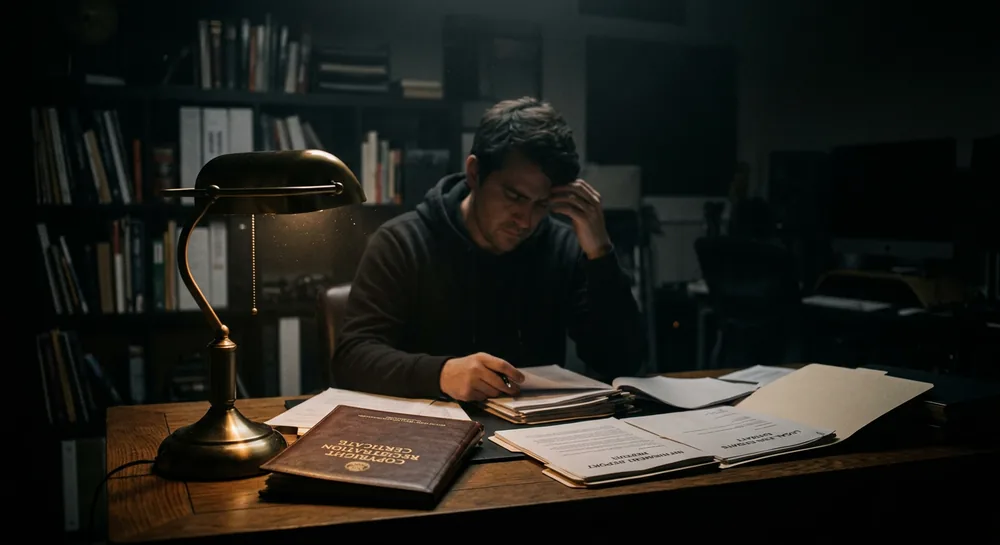
The first question you get back is one most business owners have never considered: is the work registered?
If the answer is no, the conversation changes immediately — not because you do not own the work, but because ownership and enforcement are governed by different rules.
This is the gap that catches businesses off guard. Copyright protection is free and automatic. But copyright registration matters when a business needs to sue for infringement, seek statutory damages, recover attorney’s fees, or show a court that its ownership claim has evidentiary weight.
Quick Answer: Do I Need to Register My Copyright?
Not to own it — but generally yes, to file a copyright infringement lawsuit over a U.S. work and to preserve the strongest remedies.
Copyright attaches automatically when an original work is fixed in a tangible form under 17 U.S.C. § 102. Registration with the U.S. Copyright Office is a separate step, and timely registration is what opens the door to filing an infringement suit over a U.S. work under 17 U.S.C. § 411 and preserving eligibility for statutory damages and attorney’s fees under 17 U.S.C. § 412.
Registering after you discover infringement is often too late to recover statutory damages or attorney’s fees for infringement that already began.
Copyright Attaches Automatically. That Is Where Most Businesses Stop.
The U.S. Copyright Office explains that copyright protection exists from the moment an original work of authorship is fixed in a tangible medium — see the Copyright Office’s What is Copyright? overview. That principle is also reflected in 17 U.S.C. § 102. No notice, no filing, and no fee are required for copyright protection to exist; registration is not a condition of copyright protection. 17 U.S.C. § 408(a).
Your blog posts, product photography, marketing videos, training decks, and source code may be protected the moment they exist, assuming they meet the basic requirements for copyright protection.
Because that protection is automatic, most businesses reasonably conclude there is nothing further to do. The registration question never comes up until something has already been copied — which is the worst possible time to be asking it.
What Registration Actually Unlocks
The Ability to File Suit
For U.S. works, registration is generally a prerequisite to bringing an infringement action under 17 U.S.C. § 411. In Fourth Estate Public Benefit Corp. v. Wall-Street.com, LLC, 586 U.S. 296 (2019), the Supreme Court held that, outside statutory exceptions, this requirement is satisfied when the Copyright Office registers or refuses registration — not merely when the application has been submitted.
Practically, that means the clock on processing matters if litigation is on the horizon.
Statutory Damages and Attorney’s Fees
This is the provision that changes the economics of enforcement. Without timely registration, a copyright owner seeking money damages is generally limited to actual damages and the infringer’s profits under 17 U.S.C. § 504 — which can be difficult and expensive to prove, and often modest. The Supreme Court held in Warner Chappell Music, Inc. v. Nealy, 601 U.S. 366 (2024), that a copyright owner with a timely claim may recover damages for infringement no matter when it occurred, though the Court assumed rather than decided the discovery rule that timeliness question depends on.
With timely registration, the owner may elect statutory damages under 17 U.S.C. § 504, and the court may award attorney’s fees under 17 U.S.C. § 505, subject to the timing limits in 17 U.S.C. § 412. Statutory damages run from $750 to $30,000 per work infringed, as the court considers just, and the court may increase the award to as much as $150,000 per work where the copyright owner proves the infringement was willful. For many businesses, that difference determines whether pursuing an infringement is viable at all.
A Presumption of Validity
A registration made before or within five years after first publication generally constitutes prima facie evidence of the validity of the copyright and of the facts stated in the certificate under 17 U.S.C. § 410(c). For a registration made after that period, the evidentiary weight given to the certificate is within the discretion of the court.
That can give the registration certificate important evidentiary weight in litigation, rather than requiring the owner to prove the same foundational facts without that statutory presumption.
A Smaller Alternative: the Copyright Claims Board
Registration also controls access to the Copyright Claims Board, a voluntary small-claims tribunal inside the U.S. Copyright Office. A claim may not be asserted there unless the owner has first delivered a completed application, a deposit, and the required fee to the Copyright Office, and registration has either issued or has not been refused, under 17 U.S.C. § 1505. If the certificate is still pending, the proceeding is held in abeyance until it is submitted; if the Copyright Office refuses registration, the proceeding is dismissed without prejudice. Because the forum is voluntary, a respondent may opt out and send the dispute back to federal court.
Not sure what your business has registered — or whether anything is? A short review can identify the works worth protecting and whether the timing windows are still open. We help companies in Arizona, California, and Texas.
Review your copyright position →The Timing Rule That Decides Your Leverage
Registration is not simply a box to check whenever it becomes convenient. The statute ties the enhanced remedies to when you registered relative to when the infringement began.
In general terms, statutory damages and attorney’s fees are unavailable for infringement that began before the effective date of registration. For published works, there is an important exception if registration is made within three months after first publication. These timing rules come from 17 U.S.C. § 412.
That three-month window is the one most businesses miss, because it runs from publication, long before anyone has copied anything.
The practical consequence is straightforward: registering your best content shortly after you publish it costs relatively little and preserves options. Registering after you discover a competitor copying it preserves far fewer.
This is one of the few areas of business law where a modest, routine step taken early can have an outsized effect on what you can do later.
What You Can Do Before You Register
Registration is not the only tool, and its absence does not leave you without options.
Notice-and-takedown procedures under the Digital Millennium Copyright Act allow a copyright owner to notify a hosting provider or platform that infringing material is on its service — see the Copyright Office’s Section 512 overview. Takedown notices do not require registration and are often the fastest way to get copied content removed from a website, marketplace, or social platform.
They also carry obligations. A takedown notice must include statements about the sender’s good-faith belief and authority to act, including a statement made under penalty of perjury as to authorization. Misrepresenting infringement can create liability of its own.
A notice sent reflexively at material you do not actually own, or at use that may be permissible, is not a free action.
Cease-and-desist correspondence and contractual remedies may also be available depending on the relationship — particularly where a former contractor, licensee, or agency is involved and a written agreement governs the use.
New laws, before they catch you off guard.
Monthly. New Arizona, California, and Texas business-law changes, the deadlines attached to them, and what they mean in practice. No spam — unsubscribe anytime.
By subscribing you agree to receive emails from Accord & Shield Legal. This is general information, not legal advice.
What Businesses Actually Should Register
Registering everything is neither practical nor necessary. The useful question is narrower: which works would you actually want to stop someone from copying, and which ones carry commercial value if they were taken?
For most companies, that means the material competitors would benefit from lifting, including:
- Substantial website and landing page copy;
- Course and training content;
- Whitepapers and research;
- Original photography and video;
- Proprietary templates and tools; and
- Software.
Content published on a recurring basis, such as a blog, may be eligible for group registration options rather than one-work-at-a-time filings, depending on the type of content and Copyright Office requirements.
Before you register, confirm you own what you are registering. If contractors, agencies, or freelancers created the material, ownership may sit with them absent a written assignment — a problem we cover in detail in our post on whether you really own your company’s IP.
Registering a work the company does not actually own creates a different problem rather than solving one.
Building a content library, course, or software product? Coordinating ownership and registration while the work is being created is far simpler than reconstructing both later.
Talk through a registration plan →Copyright Is Not Trademark — and Neither Covers Everything
Business owners frequently use copyright and trademark interchangeably, but the distinction matters when something goes wrong.
Copyright protects original works of authorship — the expression itself. It generally does not protect names, titles, slogans, or short phrases, and 17 U.S.C. § 102(b) excludes ideas, procedures, processes, systems, methods of operation, concepts, principles, and discoveries from copyright protection.
Your business name, brand, and logo usually fall under trademark law instead, which is a different filing system with different timing and different remedies. If the problem is that someone is using a name confusingly similar to yours, that is a trademark question, not a copyright one.
A logo can involve both copyright and trademark, which is one reason brand assets are worth reviewing as a set rather than piecemeal.
Ideas, methods, and systems are also outside copyright’s scope. Protecting those generally runs through trade secret or patent strategy, or through contract.
Where Copyright Problems Surface
Copyright issues tend to appear at predictable moments:
- A competitor launches with familiar-sounding copy;
- A former contractor reuses deliverables for another client;
- A course or template is resold without authorization;
- An acquirer’s diligence team asks which content the company owns and can prove it owns; or
- A platform declines to act on a takedown notice that was not properly supported.
In each case, the question is the same: what do you own, can you prove it, and what remedies are still available?
Those answers are determined largely by decisions made long before the problem appeared.
How Accord & Shield Legal Can Help
We help businesses identify which works are worth registering, confirm ownership before filing, and build practical copyright protection into their broader IP strategy.
That may include reviewing contractor and agency agreements, identifying gaps in ownership, preparing copyright registration filings, responding to infringement, sending takedown notices, or coordinating copyright and trademark protection for brand assets.
If your company creates content, software, training materials, photography, video, or other commercially valuable works, registration is not just an administrative formality. It is part of preserving leverage before a dispute begins.
Talk With Accord & Shield Legal
If you are not sure whether your company’s key materials are protected, registered, or enforceable, Accord & Shield Legal can help you assess what you own and what steps make sense before a problem arises.
Legal Sources Cited
- 17 U.S.C. § 102 — subject matter of copyright and limits on copyright protection.
- 17 U.S.C. § 410 — registration certificate and prima facie evidentiary effect.
- 17 U.S.C. § 411 — registration and civil infringement actions.
- 17 U.S.C. § 412 — registration as prerequisite to statutory damages and attorney’s fees.
- 17 U.S.C. § 504 — actual damages, infringer’s profits, and statutory damages.
- 17 U.S.C. § 505 — costs and attorney’s fees.
- Fourth Estate Public Benefit Corp. v. Wall-Street.com, LLC, 586 U.S. 296 (2019) — Supreme Court decision on when registration is made for purposes of filing suit.
Disclaimer
This article is provided by Accord & Shield Legal for general informational and educational purposes only. It is not legal advice and should not be relied on as legal advice for any specific business, dispute, work, registration, takedown notice, or enforcement decision. Copyright law is fact-specific, and the correct strategy may depend on ownership, publication status, timing, contracts, platform rules, jurisdiction, and the particular use at issue.
Reading this article, visiting this website, or contacting the firm through the website does not create an attorney-client relationship with Accord & Shield Legal or any of its attorneys. An attorney-client relationship is formed only after the firm confirms that it can represent you and you sign an engagement agreement. You should not send confidential or time-sensitive information until an attorney-client relationship has been established.
No representation is made that the information in this article is complete, current, or applicable to your specific circumstances. Prior results do not guarantee a similar outcome. If you have a copyright, trademark, contract, takedown, or infringement issue, consult qualified legal counsel before taking action.
Frequently Asked Questions About Copyright Registration
Do I have to register a copyright before I own it?
No. Copyright ownership generally begins automatically when an original work is fixed in a tangible form under 17 U.S.C. § 102. Registration is a separate step that affects enforcement, evidence, and remedies.
Can I sue for copyright infringement without registration?
For U.S. works, registration is generally required before filing a copyright infringement lawsuit under 17 U.S.C. § 411. In most cases, submitting the application is not enough; the Copyright Office must first act on the application, subject to statutory exceptions, as the Supreme Court held in Fourth Estate.
Can I send a DMCA takedown notice without registering the copyright?
Yes. A copyright registration is not required to send a DMCA takedown notice. But takedown notices should be used carefully because they require statements about good-faith belief and authority to act, and misrepresentations can create liability.
Is it too late to register after someone copies my work?
It is not too late to register, but under 17 U.S.C. § 412, it may be too late to recover statutory damages or attorney’s fees for infringement that already began. That is why businesses should consider registering commercially important works before there is a dispute.
What business materials are most important to register?
The strongest candidates are usually materials with commercial value that competitors, former contractors, or unauthorized sellers would benefit from copying. Examples include substantial website copy, course materials, original photography and video, software, templates, and other core business content.